
Dubai Hop-On Hop-Off Bus: How to Plan Your Stops
Use your confirmed bus operator, route map and timetable to choose worthwhile hop-offs and a realistic return plan in Dubai.
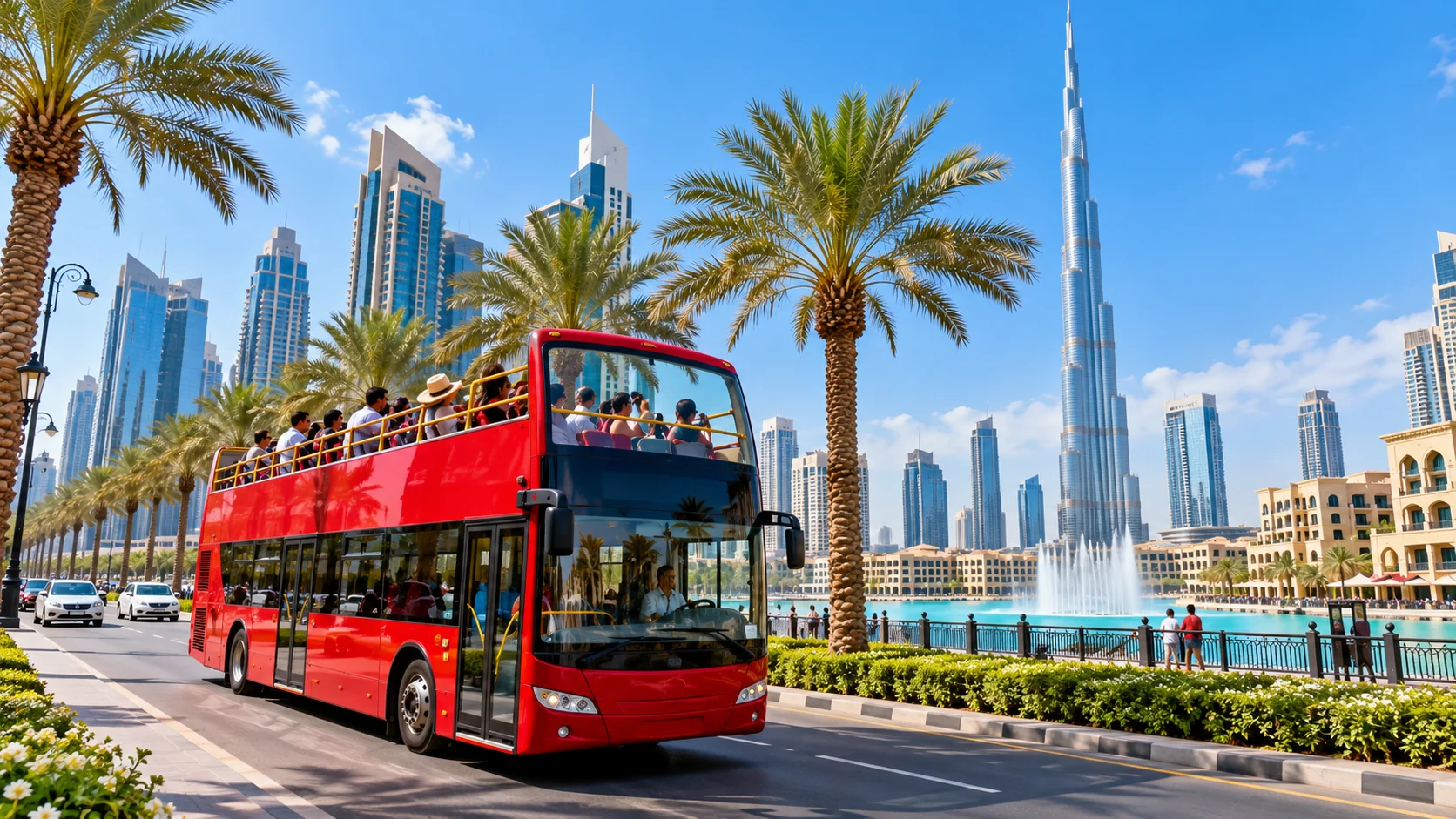
A hop-on hop-off bus can make Dubai sightseeing feel simple: board, see the city and leave the bus when a place interests you. The useful flexibility comes with a small amount of planning. You need the right operator, current route map, ticket rules and enough time to get back on a service that still reaches your next stop. The ticket's validity is only one part of the day.
For more planning detail, read about comparing half-day and full-day routes.
This guide explains how to plan Dubai hop-on hop-off stops without copying a fixed route that may change. It helps you decide how many visits fit, what to check on the voucher and when a guided vehicle tour may suit you better. It does not invent a route colour, stop number or live timetable. Those details should come from the supplier attached to your actual ticket.
First identify the operator on your voucher
The Dubai Hop-On Hop-Off Bus Tour page explains that these products are operated by named third-party bus companies. Its route, stop list, validity, audio-guide languages and extras must match the confirmed supplier voucher. The website lists selected bus tickets, a route map and audio guidance where specified. Hotel pickup, food and attraction entry are not included unless expressly listed.
This means you should not follow a map simply because it says “Dubai sightseeing bus.” Different operators can use different stops and services. Read the company name and product on your voucher, then obtain that operator's current instructions. Keep the voucher and map together. A screenshot from an older travel post may be interesting background, but it is not the working plan for your day.
Check what starts the ticket clock
Ask when validity begins and what it covers. Does the particular ticket activate at first use, have a dated booking or follow another rule? Confirm how the stated period relates to operating hours. A ticket valid across a period of hours does not mean buses run through every one of those hours. The route timetable still controls when you can travel.
Check each traveller's ticket category and any conditions for children before purchase. Do not assume every extra has the same validity as the main bus service. A separate included activity may require its own reservation or boarding instructions. Make a small list of the parts you actually want to use, and confirm their arrangements rather than treating every advertised extra as automatically available at any time.
Choose your first boarding stop carefully
Look at the current map and choose a valid stop that is practical from your accommodation. Hotel pickup is not listed as part of the standard product. Allow for the journey to that stop, finding its correct side of the road and checking the voucher. A station name or landmark district can cover more ground than you expect, so get the precise boarding instruction.
Avoid starting with the most distant stop just because it is first on a sample itinerary. Your hotel location, first priority and desired finish point matter more. Ask the supplier if you are unsure about boarding at a particular point. Arriving at the right operator's marked stop makes the start easier than trying to identify a bus while standing at an unrelated local transport stop.
Save the return information first
Before leaving the bus for an attraction, check how you will continue or return. Note the relevant last service, direction and stop. Do not wait until you have finished a long visit to find out whether the route still runs there. The final departure from a route's starting point may not be the same as the last useful bus for your own journey.
Make the return plan visible to everyone in the group. A traveller who stays longer at an attraction needs to understand the effect on the remaining route. If the group splits, agree how it will meet again. Do not assume people can simply catch any bus displaying a sightseeing name. Each person should have the correct ticket access and the relevant operator's instructions.
Plan fewer hop-offs than you first imagine
A stop involves getting off, walking, visiting, returning to the boarding point and waiting for the next service. The time inside the attraction is not the whole time used. If you add several substantial indoor visits, much of the day can disappear before you complete the route. Pick a small number of important hop-offs and treat the rest as views from the bus.
Start with one must-see visit, one optional stop and a comfortable break. Build a larger plan only after checking the real timetable. This is especially helpful on a first day, when you are still learning distances and entrances. A shorter plan leaves room to enjoy an unexpected view without making every later stop feel like a deadline you have already missed.
A sightseeing-led day
If the bus ride itself is your priority, use it to understand the city and choose only a few places to explore on foot. Listen to the audio where provided, note the areas you might return to and avoid treating every landmark as a compulsory exit. The value may be the overview rather than a large count of attractions completed.
For that kind of day, choose a finish that is easy for your accommodation or next plan. Keep a break between the bus and a fixed evening booking. If you want a guided introduction with transport organised around one group, compare the half-day Dubai city tour. The comparison should be about the experience you want, not just the length printed on the ticket.
An attraction-led day
If one paid attraction matters most, confirm its ticket and visit arrangements before using it as the centre of your bus plan. Entry is not automatically included. Work backwards from the required arrival and leave enough room for boarding, traffic and the walk from the stop. Do not build a tight connection around an approximate route time.
After the attraction, decide whether there is still useful bus time or whether a different finish is more practical. You do not have to force another full loop because it was in your original notes. However, any separate travel is your responsibility unless included in the booking. Keep a realistic budget and a way to reach the next place if the bus no longer suits the remaining day.
Check route changes before setting out
City events, traffic arrangements and supplier operations can affect a route. Use the operator's current notice and timetable rather than assuming last month's stop list still applies. Check again if your ticket covers more than one day and you plan a different route on the second day. A small update can change the best boarding point or remove a connection you expected.
If a stop is unavailable, ask the supplier for the current alternative. Do not wait at an old location because a saved map shows it. Keep the latest operational information with your voucher. This does not require spending the holiday watching updates; it means doing one practical check before leaving and following any messages relevant to your booked service.
Make the ride comfortable
Choose seating according to the actual vehicle, conditions and staff instructions. Do not assume a particular deck or seat will always be available. Bring the ordinary items you need for time outdoors and keep water accessible where allowed. If heat, walking or steps are important concerns, ask about the specific service before purchase rather than relying on a general description of a sightseeing bus.
For children, plan breaks and keep the number of hop-offs manageable. Confirm how strollers, luggage or mobility equipment are handled on the selected bus. Describe the equipment and practical boarding needs clearly. A ticket label does not tell you every dimension or access arrangement. The supplier needs to confirm whether its actual vehicle and stops can support your requirements.
Audio guides and languages
If a particular language is important, check it against the selected product. Do not assume every operator or every departure offers the same options. Ask whether you need headphones or whether they are supplied, and test the system when boarding if staff instruct you to. Tell the crew promptly about a problem rather than waiting until the end of the route to report it.
An audio guide is also different from a live guide who can answer your questions. Decide which style suits you. If personal explanation, group pacing or a custom route is central to the day, a private Dubai city tour may be a useful alternative to compare, with specialist guiding quoted when requested. Read the inclusions rather than assuming every transport service provides the same commentary.
Use a small route worksheet
Write five things: operator, first boarding point, main hop-off, last useful service and final destination. Add any separate ticket time. This small worksheet is easier to use than several overlapping screenshots. Keep optional visits underneath so they do not look as important as the essential ones. If the day changes, you can see what to protect and what to drop.
At the end of the first loop or major stop, review the remaining time honestly. A relaxed finish is usually more useful than rushing to an extra place only to miss the return. The purpose of a flexible ticket is to help you shape the day. Use that freedom to fit your energy and interests while respecting the operating timetable that makes the journey possible.
Make a second day different from the first
If your selected ticket covers another sightseeing day, use what you learned on the first one. You may decide to spend more time in one district rather than repeat the same journey and the same pictures. Check the second day's operating information, identify the stops you still want and leave the rest optional. A longer validity period is useful when it reduces pressure, not when it encourages an even longer list.
Keep separate records of anything that needs its own reservation. A bus ticket and an attraction booking can sit in the same email without sharing the same rules. Before heading out again, check which parts have already been used and which remain available. That simple review helps you use the ticket sensibly and avoids disappointment at a venue whose entry conditions differ from the main bus service.
Turn a tour description into a clear booking
A useful tour confirmation answers practical questions in plain language. It names the experience, date, people travelling, start arrangement, finish arrangement and important inclusions. A picture of a landmark cannot tell you whether you will go inside. A phrase such as “flexible route” cannot tell you how many hours are booked. Read the written details together before making the final choice. Ask about anything that would change your decision, especially a must-see attraction or a fixed evening commitment.
Check the total and what it covers
Ask for the total for your own group and date. Check whether the amount is per adult, per child, per ticket or for the whole vehicle. Do not multiply a headline price until the pricing basis is clear. Keep entry tickets, food, transfers and optional activities on separate lines when they are charged separately. Two quotes can look very different because one includes something the other leaves for you to arrange. Compare the same service before choosing on price.
An optional extra should stay optional. Ask what happens to the day if you do not buy it. Can you spend that time at an agreed nearby stop, or must you remain with the group? If some people want the extra and others do not, check the meeting arrangement before paying. This is particularly useful when a group has different interests. A clear answer can prevent a long wait or a rushed reunion later.
Give useful information without oversharing
Send the travel date, number of adults, children's ages where relevant, hotel location and your main priorities. Mention practical needs such as shorter walks, step-free boarding or room for a folded stroller. Describe what help you need rather than sending private medical records. The booking team can then check whether the specific vehicle, venue or service suits the request. Do not assume a general family label means every individual access need has been assessed.
Keep one person responsible for the final version of the plan. A group chat can contain several different dates, hotel names and suggested routes. Once everyone agrees, send one short summary and ask the team to confirm it. Save that reply where you can find it offline. If someone changes hotels or adds a passenger, update the booking team early. A message to another traveller does not automatically change a supplier's reservation.
Read the change and cancellation terms
Check the cancellation deadline and which time zone it uses. Ask whether tickets, transport and activities have separate change rules. A tour may involve more than one supplier, so changing a vehicle arrangement may not move an attraction ticket. Do not treat a flexible conversation as a promise that every part can be changed without cost. Read the applicable terms before payment, and keep the confirmation with the receipt.
If weather or access affects the experience, ask what the operator will offer. Possible outcomes depend on the booking, supplier and reason for the change. They may involve a revised route, a different time or another arrangement under the stated terms. Do not rely on an article to promise a refund or replacement. The point of asking early is to know who will contact you and what choice you will have if the original plan cannot run.
Leave a real buffer around the experience
Travel time, waiting time and activity time are different parts of a day. A journey shown on a map does not include finding the meeting point, walking from parking, checking a voucher or gathering a group. Leave space between the tour and a separate reservation. If a finish time matters, tell the team before it builds the route. An early request gives more room to choose sensible stops than a last-minute warning during the drive.
Finally, make the plan easy to use. Keep the confirmed meeting instructions, contact method and essential tickets together. Charge your phone, bring the ordinary items your group needs and avoid carrying more than you can manage at every stop. Check the latest operational message before leaving. Good preparation does not remove every surprise. It helps you respond calmly, protect your priorities and enjoy the experience you actually booked.
Ten hop-on hop-off planning FAQs
1. Is hotel pickup included?
The listed hop-on hop-off product does not include hotel pickup. Plan how to reach a valid stop using the instructions for your confirmed operator. Allow time to locate the boarding point. If a separate transfer has been offered, check that it appears in your booking rather than assuming it comes with every bus ticket.
2. Can I use any sightseeing bus in Dubai?
No. Follow the operator and product on your voucher. Different companies can have different maps, tickets and rules. Keep the correct name and boarding instructions available. A bus that looks similar is not proof that your ticket is valid for it. Ask the supplier when the operator or route is unclear before starting your journey.
3. Does a 24-hour ticket mean buses run all night?
Do not interpret ticket validity as continuous service. Check the actual operating timetable and activation rule for your product. The hours when you may use a ticket and the hours when buses run are different details. Plan your last useful journey around the service timetable, especially if you hop off for a long visit.
4. Are attraction tickets included?
Only when the selected ticket explicitly lists them. Confirm the attraction, ticket type and any separate reservation. A stop beside a venue does not provide entry. Allow enough time for admission and the return to the bus point, and do not assume a bundled extra can be used whenever you happen to arrive.
5. How many stops should I explore?
Choose a few important stops rather than trying to leave at every one. Count walking, visiting and waiting, not only the time inside a venue. The right number depends on your interests and the timetable. A focused day often gives more enjoyment than a long checklist that leaves you watching the clock at every place.
6. Can we bring a stroller or mobility equipment?
Ask the supplier about the actual equipment, boarding and storage arrangement before booking. Provide useful dimensions or practical needs when requested. Do not rely on a broad family or accessible label. The route's stops and the specific vehicle both matter, and the supplier should confirm whether the service can support your group's requirements.
7. Will the route always stay the same?
No route should be treated as permanently fixed. Check current supplier notices for changes that affect your travel day. If a stop has moved or closed, use the confirmed alternative rather than an old map. Keep the operator's contact details available so you can ask a focused question when an instruction is unclear.
8. Is a live guide included?
The product lists an audio guide where specified. A live guide is a different service. Confirm the language and format if commentary matters to you. If you prefer personal explanations or a route tailored to one group, compare a guided vehicle tour and ask exactly what guiding is included in that alternative.
9. What if we miss the last useful bus?
Contact the supplier for guidance and arrange the next journey according to your circumstances. Do not assume a replacement transfer is included. Prevent the problem by checking return information before a long hop-off. Leave room around separate reservations so a missed connection does not immediately affect the rest of your evening.
10. How can I compare this with a city tour?
Decide whether you value independent stops or a route organised around a group. Compare boarding, hotel transfers, guidance, entry tickets and available time. Use the city tour collection to review alternatives. The best choice is the service that fits how you want to spend the day, with the practical arrangements understood before payment.


